 Skip to content


 Service
 Merch store
Film production
Planning a Recruiting Film: What to Settle Before the Shoot Day

Oct
ⓘ AI imageThe featured image is an AI-generated illustration.
In short
A recruiting film almost never fails on the shoot. It fails on decisions nobody made beforehand: which role is this film for? Who speaks? Who is allowed to appear? And where does it run in the end? If you are planning a recruiting film, answer these questions before the first shoot day.
Four points that should be settled before the shoot day:
- One role or one audience, not "the company". A film for everyone speaks to no one.
- Three to five people who genuinely want to be on camera. Volunteering is not politeness, it is the precondition for valid consent.
- Written consent, obtained before the shoot, not after.
- The distribution channels, because they determine the format: careers page, social media, job fair — these do not need the same aspect ratio.
With that settled, a shoot day is a shoot day and not a running negotiation.
Recruiting film or image film? Not the same thing
The two formats get confused regularly, although they answer different questions:
| Recruiting film | Image film |
|---|---|
| Focus on careers and employer branding | Focus on brand and company |
| Audience: applicants | Audience: customers and partners |
| Shows workplaces and culture | Shows products and services |
| Recruiting message | Brand message |
In practice: an image film that ends with "we’re hiring" is not a recruiting film. If you need both, you can capture both on one shoot day — but as two edits, not as one film with two goals. More on the other format on the image film production page. Onboarding after the hire is a third format – see Planning training videos in modules.
The role first, then the film
The most useful opening question is not "what do we want to show?" but: who do we want to reach, and what is stopping that person from moving today?
A film for nurses has to answer different things than a film for developers — rosters and team versus technology stack and decision paths. Putting both into one five-minute film means answering both halfway.
Before the concept, write down three sentences:
- This is the person we want to reach.
- This is what they do not know about us today.
- This is what they should do after watching.
Point 3 matters more than it sounds. "Apply" is a different goal from "look at the job ad" — and it changes the length and the ending of the film.
Who belongs on camera – and who does not
The most credible recruiting films are not carried by the management team but by the people who do the work being talked about.
- Take the ones who volunteer. Visible reluctance shows in every shot.
- Three to five people are enough for a two- to three-minute film. More faces means less time per person.
- A mix beats selection by hierarchy. Someone still onboarding, someone with ten years in the company, someone from leadership — that covers more questions than three department heads.
- No memorised scripts. Send the questions in advance and let the answers emerge in conversation. When exact wording is required, there is the teleprompter.
Consent: the part that must be done before the shoot
Filming employees and publishing the result means processing personal data and distributing images of identifiable people. Two foundations:
- Section 22 of the German Art Copyright Act (KunstUrhG): images of a person may in principle only be distributed or publicly displayed with that person’s consent.
- GDPR: consent must be freely given and demonstrable, and it can be withdrawn at any time (Art. 7 GDPR).
For the shoot day this means:
- In writing, before the shoot. Consent obtained only after the edit can force you to re-cut the film.
- Specific in scope. Which film, which channels, which period, paid ads included? A blanket "for everything" consent is the weakest version.
- Plan for withdrawal. Agree internally who decides how the film changes if someone withdraws consent or leaves the company. That is an organisational question, not a legal one.
- Think about bystanders. In an open-plan office, people walk through frame who were never asked. Either announce and clear the area in advance, or frame so that they are not identifiable.
This is not legal advice and does not replace case-by-case review — but no shoot day should start without these four points.
Planning locations and the shoot day realistically
The package structure at 3DMS makes the relationship visible: 4 hours, 8 hours or two times 8 hours. What fits into which slot depends almost entirely on the number of set changes.
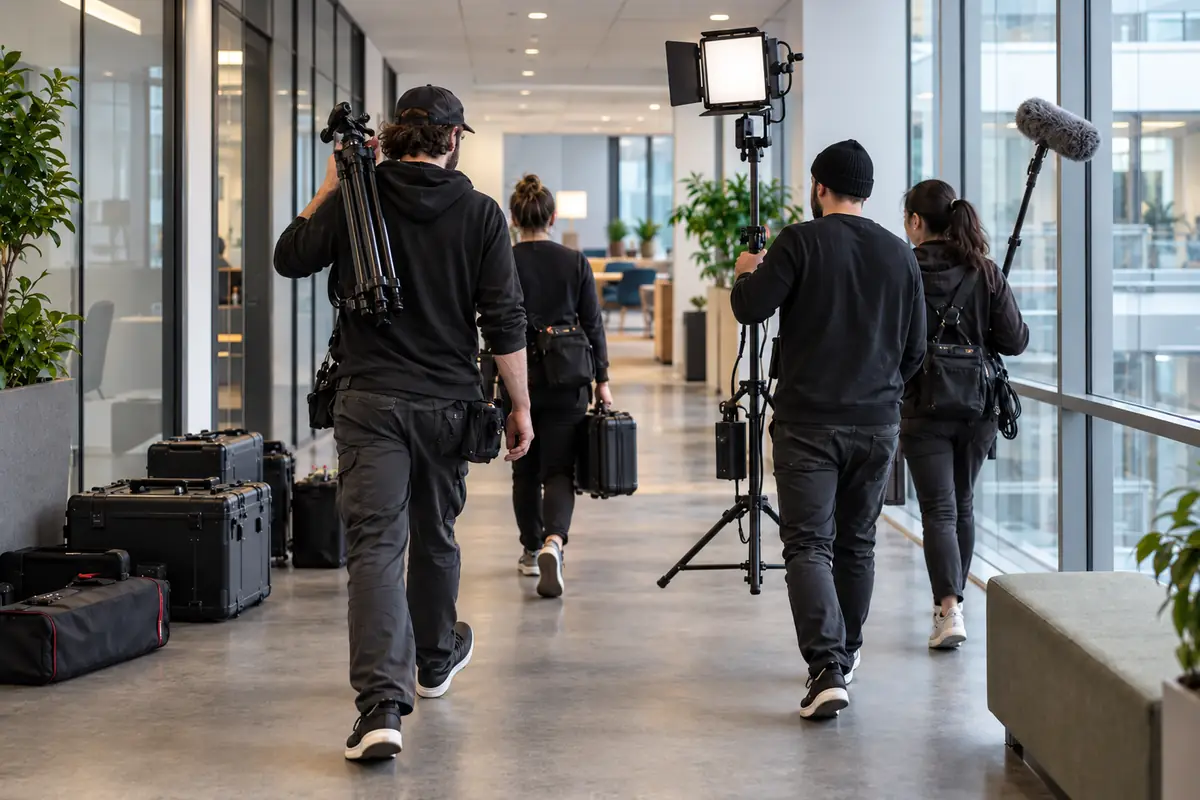
- One set change costs 30 to 60 minutes. Light, sound, camera, power. Five locations in one day means five set changes and little film.
- Two to three locations in half a day is realistic if they are close together.
- Interviews first. They are the core of the film and need people who are fresh. Cutaways can be picked up in the afternoon.
- Quiet rooms for interviews. A meeting room with the door closed beats any lobby with a view.
- Free up a contact person. Someone who opens doors, calls in colleagues and can make decisions saves at least ten minutes in every hour.
Sound matters more than picture
Viewers forgive a slightly underexposed image. They do not forgive bad sound — they click away.
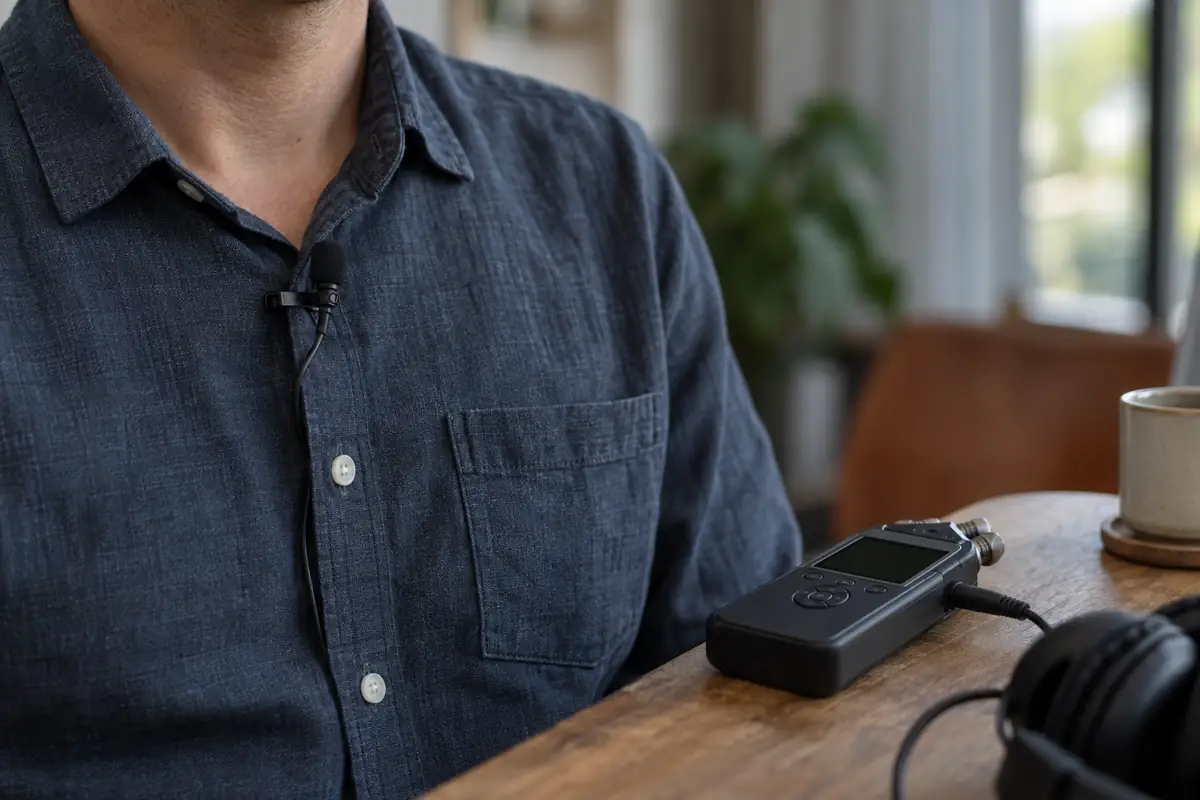
That is why every interview needs a lavalier microphone or a boom plus a separate recorder, not the camera mic. And that is why it pays to locate the air conditioning, the copier and the coffee machine before the shoot. Both are part of the 3DMS recruiting film packages.
Plan vertical and horizontal from the start
A recruiting film rarely runs in only one place. Careers pages and YouTube want landscape, social feeds and stories want vertical, and a job fair wants a silent loop without speech.
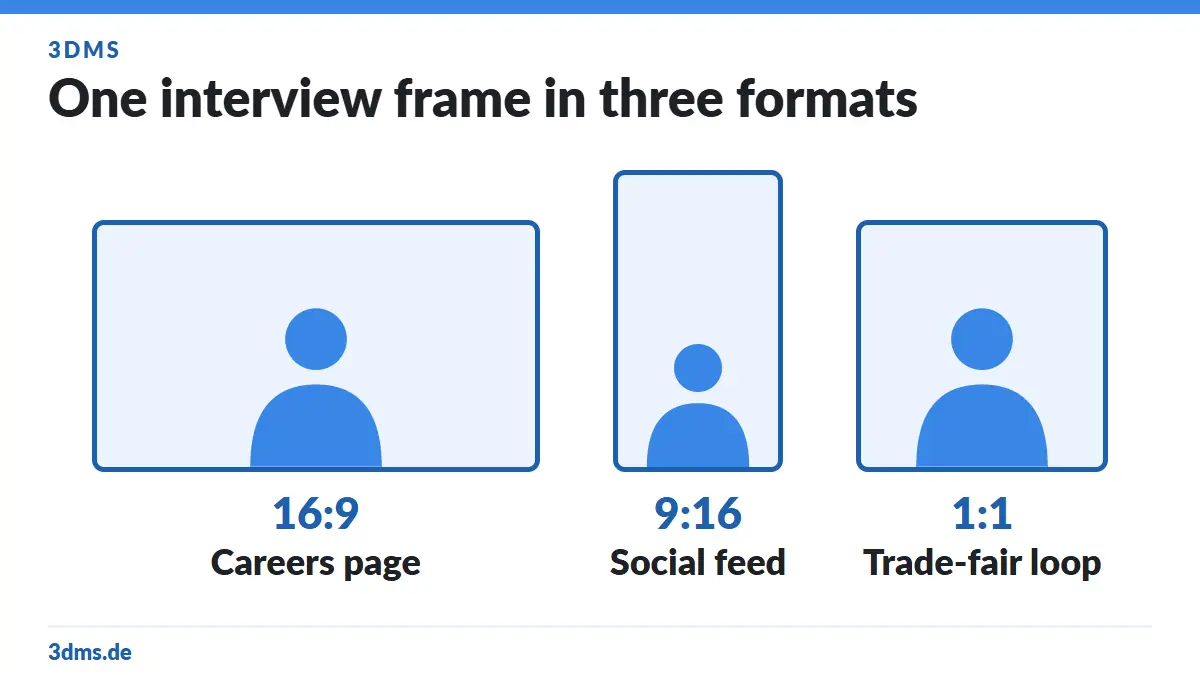
Plan the versions before the shoot rather than after — then interviews are framed so that a 9:16 crop stays possible without cutting off heads. How the formats relate is covered in detail in the post video formats for business; the matching service page is social media video.
Subtitles and lower thirds are part of the job
A recruiting film is often watched on the side — on the train, in a feed, without sound. Without subtitles you lose that part of the audience entirely.
- Subtitles as a file, not burned into the picture. YouTube supports common subtitle formats; a separate file can be corrected and translated, burned-in text cannot.
- Lower thirds with name and role for every speaker. They cost nothing and answer the first silent question every viewer has.
- Consider an English version if you recruit internationally. Subtitles are the cheapest route; if you want a spoken version, there are voice talents.
Making sure the recruiting film gets found
A recruiting film that only sits in the application portal works only for people who are already there. Two things help:
- Video markup on the careers page. Google documents with its video schema markup (
VideoObject) how embedded videos should be described so that Search can recognise them. That is your website’s job, not the production’s — but someone has to plan it in. - One edit per channel. The two-minute version for the careers page, 30 seconds for the social ad, a silent loop for the trade fair. From a single shoot day, 3DMS can produce vertical and horizontal versions in parallel in 4K and 6K.
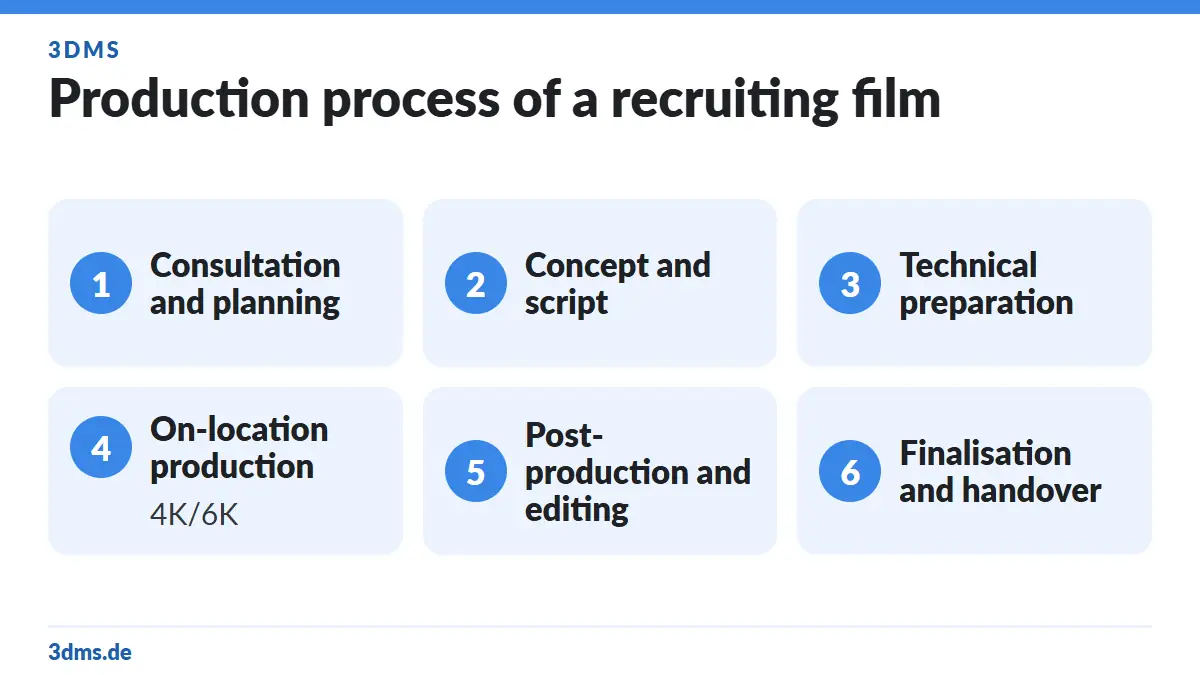
How production works at 3DMS
- Consultation and planning — goals, audience, intended use.
- Concept and script — idea, storyboard, direction.
- Technical preparation — camera positions, light and sound.
- On-location production — recording with 4K and 6K cameras.
- Post-production and editing — edit, effects, colour correction, sound.
- Finalisation and handover — delivery in all common formats.
What a recruiting film costs
| Package | Shoot time | Price |
|---|---|---|
| Basic | 4 hours | €1,399 |
| Pro | 8 hours | €1,899 |
| Ultra | 2 × 8 hours | €3,599 |
All prices net plus 19 % VAT; additional hours €299 net per hour. Each package includes director and script, film crew and equipment, 4K drone and GoPro, lavalier microphone, boom and recorder, 4K editing with effects, plus lower thirds, graphics, logo and slides. As of 28 September 2026 — current details on the recruiting film and price list pages.
Common mistakes – and how to avoid them
- Producing one film for every role. In the end it speaks to nobody in particular.
- Obtaining consent after the shoot. One objection then forces a re-edit.
- Letting people recite memorised text. The most reliable route to stiffness.
- Scheduling five locations in one day. The day turns into set changes.
- Thinking about vertical only after the edit. Then the top and bottom of the frame are missing.
- Skipping subtitles. Without sound, nothing of the film survives.
- Naming no contact person. Every open question costs the whole crew time.
FAQ – planning a recruiting film
How long should a recruiting film be?
Two to three minutes is a good range for a careers page. For social media you additionally need a short version of around 30 seconds. Plan both before the shoot, not afterwards.
How many employees should take part?
Three to five is enough for a two- to three-minute recruiting film. More important than the number is that they take part voluntarily and come from different areas.
Do I need written consent from the people filmed?
Yes. Section 22 KunstUrhG generally requires the consent of the person depicted for the distribution of their image; under Art. 7 GDPR consent must be demonstrable and can be withdrawn at any time. Obtain it in writing and before the shoot.
What happens if someone leaves the company?
The film initially remains valid if the consent covers it. Still, agree in advance who decides whether a person is edited out — and budget for a later edit change.
Recruiting film or image film – which do we need?
A recruiting film addresses applicants and shows workplaces and culture. An image film addresses customers and partners and shows brand and services. Both can be shot on one day but should be edited separately.
Can we shoot in a single day?
With two to three nearby locations and three to four interviews, an eight-hour day is realistic. Across several sites, two shoot days is the more honest plan.
Do we get a vertical version as well?
Yes, vertical and horizontal versions can be produced in parallel. Say so before the shoot so the framing allows for both from the start.
Planning your recruiting film
Once audience, participants and distribution channels are settled, the rest is film production. Have a look at the recruiting film page, check the price list and the location — then write to us through the contact form. Bring the three sentences from the section above and the framework will be settled in the first conversation.
Sources
Last Updated on 10/10/2026 by 3DMS
