 Skip to content


 Service
 Merch store
Event film
Corporate Event Film: How to Plan a Film That Shows the Event
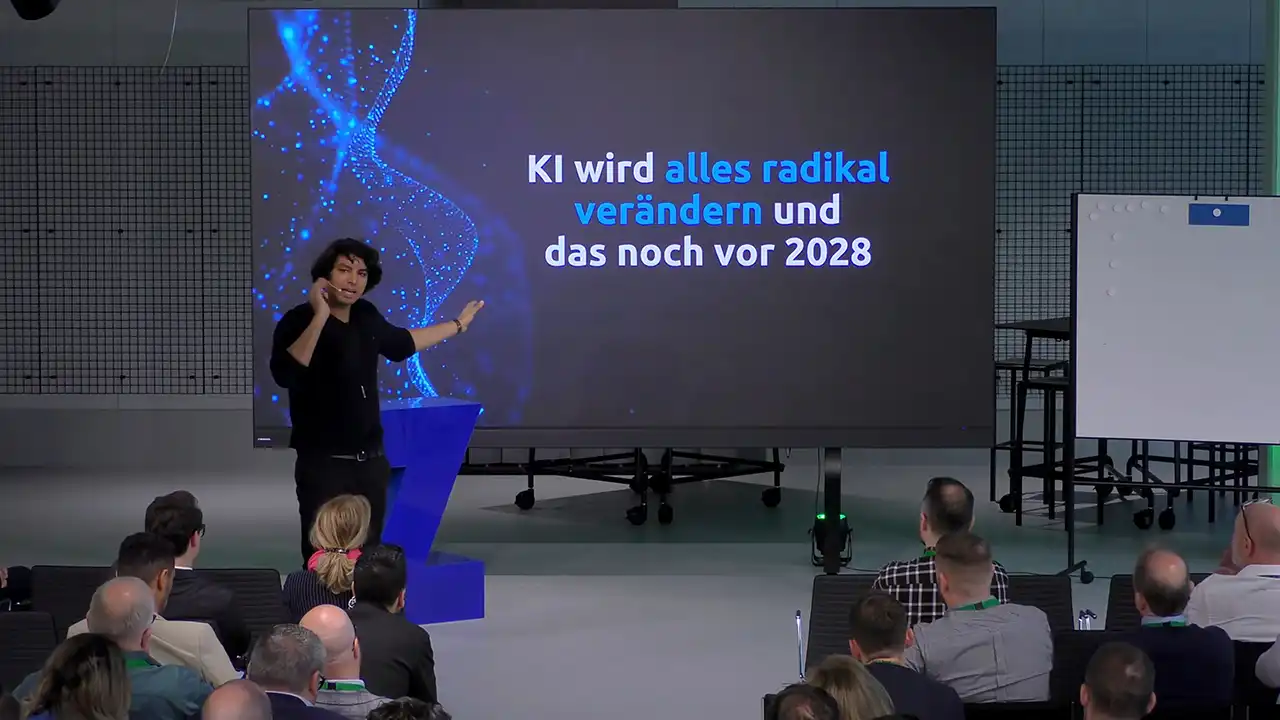
Oct
A corporate event film is not made on the day of the event. It is made in the weeks before. If you plan a corporate event film by deciding upfront what it is for, you end up with usable material – not eight hours of stage recording nobody watches.
The short version
✓ Define the purpose before booking the equipment: recap, recruiting, sponsors or internal communication.
✓ One shooting day delivers several formats – highlight film, full-length talks, social cutdowns – if it is planned that way.
✓ Audio decides whether the film is usable. Picture can be rescued, bad room sound cannot.
✓ Image rights and filming notices belong in the event planning, not in the follow-up.
✓ Packages from 950 € plus 19 % VAT, live stream from 350 €.
Purpose first, technology second
The most common reason for a disappointing corporate event film is not technical: filming started without deciding what it was for. A film meant to convince sponsors looks different from one that carries the board’s key messages internally.
So settle three questions before the briefing: who should watch the film, where does it run, and what should happen afterwards? Length, tone and the number of cameras follow from the answers – not the other way round.
Typical purposes
✓ Recap: 60 to 90 seconds of atmosphere, quotes and faces – for the website and the newsletter.
✓ Knowledge archive: full-length talks, cleanly edited, with the presentation as a second source.
✓ Recruiting: people instead of stages. Short statements from the audience carry more weight than any wide shot.
✓ Sponsors and exhibitors: visible logos, booth footage, documented presence.
✓ Next year: material you use to promote the follow-up event.
One shooting day, several formats
A corporate event film does not have to be a single video. The same shooting day produces several versions – provided it was planned that way. Cutting a vertical reel out of a wide master shot afterwards rarely works well.
A sensible combination from one day
✓ Highlight film of 60–90 seconds for the website and social media.
✓ Full-length version of each talk, for the internal archive or media library.
✓ Vertical cutdowns for Instagram, LinkedIn and TikTok.
✓ Statements from guests, speakers and exhibitors – three to five sentences are enough.
✓ Stills pulled from the video material when no separate photographer is on site.
Which aspect ratio belongs where is covered in detail in One Shoot, Every Channel: Which Video Formats You Need.
Cameras, audio and light – what makes the difference
Cameras
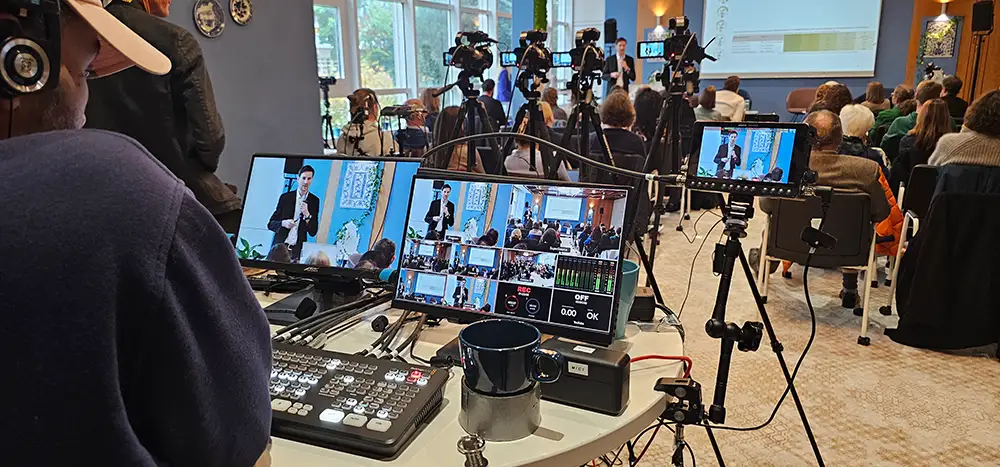
One camera shows one perspective. From two cameras onwards you can cut without jumps. For stage programmes with audience reactions, several 4K cameras are standard: a wide shot, a close-up of the speaker, the audience. The 4K resolution has a practical side effect – you can push in for a Full HD output without losing quality.
Audio
Audio decides whether an event film is usable at all. Room sound from a camera microphone is reverberant and hard to save. It gets clean with a lavalier microphone on the speaker, a boom for audience questions and an audio recorder taking the feed directly from the mixing desk. Several parallel sources are not a luxury, they are your insurance.
Light
Stage lighting is built for the audience, not for cameras. Backlight, colour changes and dark faces are the norm. A little extra light on the speaker position and the interview corner changes the result noticeably – and needs a few minutes of lead time on the day.
How to plan a corporate event film: 7 steps
One sentence is enough: “The film should show decision makers why they should attend next year.” Everything else follows from it.
We need the production schedule with times, not just the programme leaflet. Transitions matter: keynote, break, panel, evening programme.
Power, access to the audio desk, camera positions, ceiling height, daylight. Half an hour of scouting saves two hours of improvising on the day.
Who is filmed when, when do interviews happen, when are cutaways shot? Interviews belong in the breaks, not during the main programme.
Signage at the entrance, wording in the registration, a contact person on site. More on this in the next section.
Set-up before doors open, audio feed from the mixing desk, soundcheck with the speaker, then recording runs.
First a rough cut of the main version, then one round of corrections, then the short formats. Decide in advance who approves – that is the biggest time sink after the shoot.
Image rights and consent on the day
As soon as guests are recognisable on camera, the recording needs a basis. This is not a side issue; it belongs to event organisation – before the event, not after it.
What works in practice
✓ Mention photo and film recording in the invitation and the registration form.
✓ Clearly visible signs at the entrance, not just one line in the programme.
✓ A marked area without recording for anyone who prefers not to appear.
✓ Separate consent for interviews – short, written, before recording.
✓ A named contact person on site for questions from guests.
The legal basis and exceptions for personal images in Germany are set out in the Act on the Protection of Copyright in Works of Art, for example § 22 KunstUrhG, alongside data protection requirements. How you implement this is agreed with your data protection officer or legal advisors – we deliver the production, not legal advice.
Live stream and hybrid events
If participants should join remotely, a corporate event film gains a live production layer: cameras feed a video switcher, presentation and camera images are switched, the audio comes from the house desk. Zoom and conference integration can be added so that questions from online attendees are audible in the room.
The connection on site is the critical part. Check in advance whether a dedicated, stable upload is available – guest Wi-Fi is usually not enough. Details are on the live stream page.
Packages and prices
The corporate event film packages differ mainly in the maximum recording time per camera. All services are listed on the Event Film page.
Packages start at 950 € plus 19 % VAT. Live streaming, hybrid conferencing and additional hours can be added; the current terms are listed on the Event Film page as well.
Trade fair appearances have their own format: trade fair film. Individual statements and expert conversations are covered under interview.
Frequently asked questions
How many cameras does a corporate event need?
For a pure talk recording, two perspectives are enough. As soon as audience, panel and stage come together, several cameras make it far easier – the packages are built around five 4K cameras.
How long should a corporate event film be?
For website and social media, 60 to 90 seconds has proven itself. Talks are additionally exported in full length if they are to be archived or watched later.
When do we get the finished film?
That depends on the amount of material, the number of versions and your approval rounds. We set the schedule together in the briefing – binding, but not as a blanket promise.
Can the talk also be live streamed?
Yes, a live stream in 1080p at 50 frames per second is available from 350 €, as are hybrid conferences with Zoom integration. A reliable internet connection on site is the requirement.
What if the event runs longer than booked?
Additional hours can be booked; the current terms are listed on the Event Film page. If it is clear in advance that the event will run considerably longer, compare the next larger package.
Do we also need a photographer?
Not necessarily – usable stills can be pulled from 4K material. If you need classic event photography, film and photo can be combined on the same day.
What if the venue is dark?
That is why lighting is part of every package. Stages with strong backlight and colour changes are the critical cases – we check those during the site visit.
Location & directions
Filming happens at your venue. For briefings, studio interviews and approvals, the film production is based in Munich’s Westend district, right at the Westendstraße underground station.
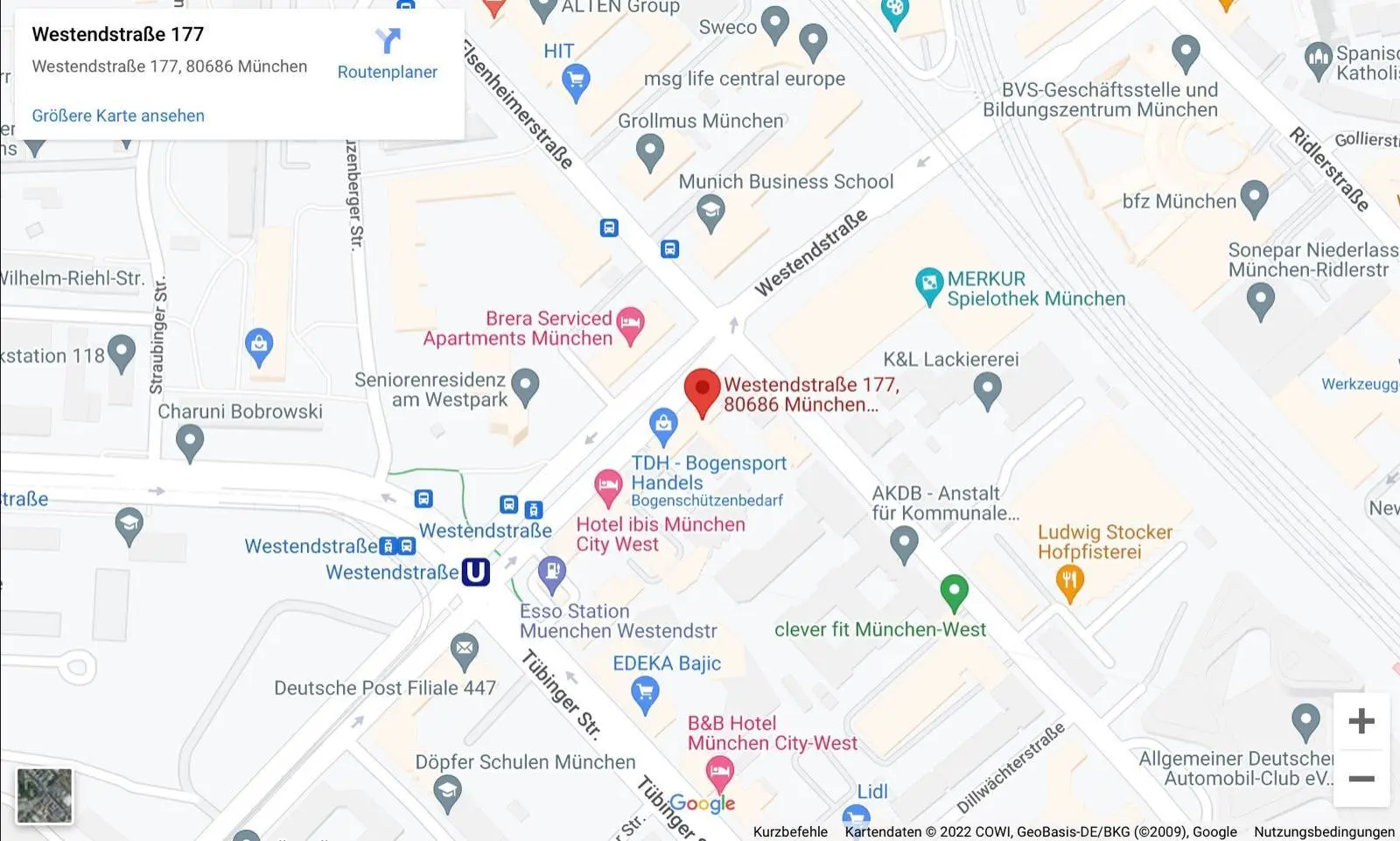
Address
3DMS Film Production Munich
Westendstraße 177, 4th floor
80686 Munich, Germany
Getting here
Underground: U4 or U5 to Westendstraße
Tram: line 18 to Westendstraße
Bus: 130 or 157 to Westendstraße, 62 to Elsenheimerstraße
Timetables and disruptions: MVG Munich
Plan your route · Location page · +49 89 78796604
Request a corporate event film
Send us the date, the venue and your run of show. We come back with a proposal for camera set-up, audio and formats.
Send a requestAll prices at a glance: price list.
Last Updated on 01/10/2026 by 3DMS
